Sunday, November 22, 2026

$10 a month

Golden Age Daily

A morning paper for Americans in their seventies. Food, a walk, and the money, in plain English.

Vol. I, No. 1 is open

Wellness collection · Vol. I, No. 1

The beam and the table

Radiation therapy is aimed energy, not a stronger x-ray of your teeth. Most visits are short. The questions are not.

· 8 min read · includes a film
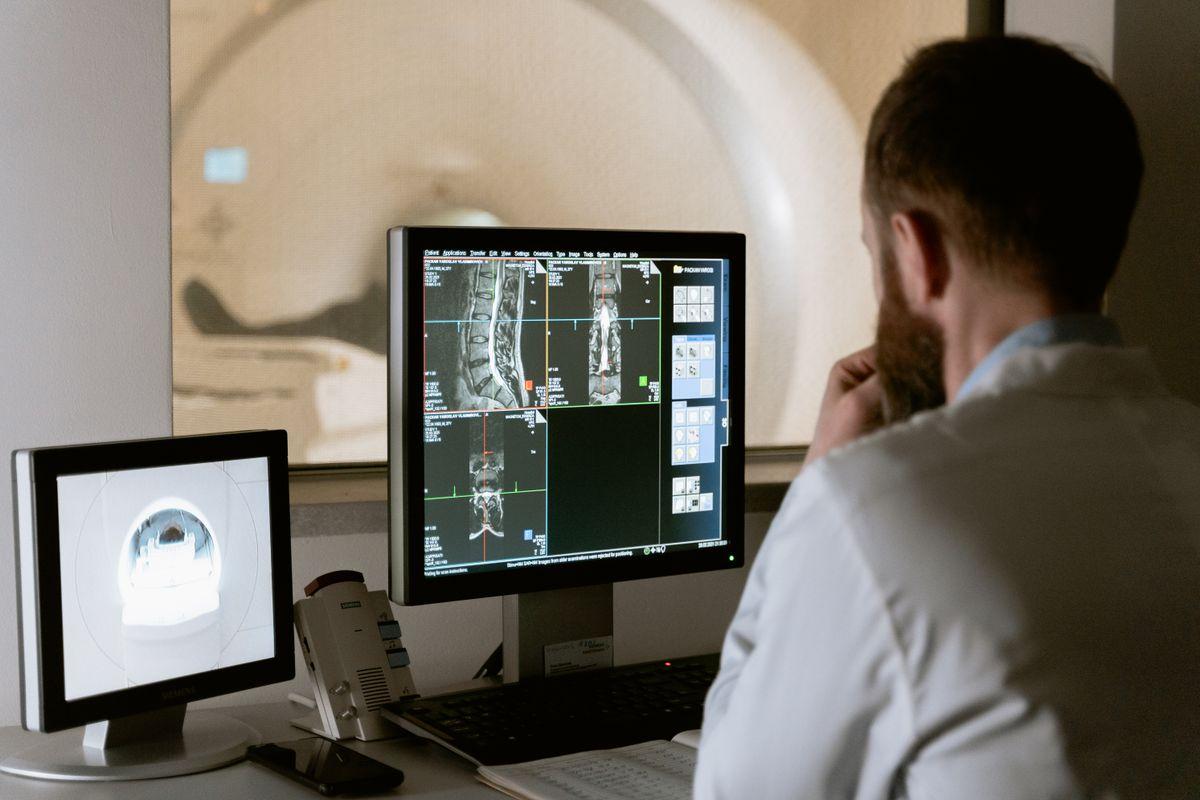
A clinician in a white coat looking at medical scans, with a scanner visible through the glass
A clinician at the screens, and a scanner beyond the glass. Pictures and treatment are different rooms. Ask which one you are walking into. Photograph by Mart Production.
Ask which kind you are getting. External beam and a source placed inside the body are not the same errand.

On film · National Cancer Institute

Prostate radiation, silent footage · silent

No narration. A person on a treatment table and the machine, from the Institute’s public footage. It shows the room. It does not choose your treatment.

Open it on YouTube

The National Cancer Institute describes radiation therapy as high doses of radiation used to kill cancer cells or slow their growth by damaging DNA. At low doses, radiation is how a dentist looks at a tooth. Treatment is not that. The dose is higher, it is aimed, and it is repeated on a schedule. The film on this page is silent footage from the Institute: a person on a treatment table, and the machine. It has no narration. It is here so the room is less of a surprise, not so you can learn your own plan from a camera.

Two different errands

External beam radiation comes from a machine outside the body. You lie still. The visit is often shorter than the drive. You go home the same day, over days or weeks. For that common kind, you do not carry radiation home in your body. Internal radiation, sometimes called brachytherapy, places a source in or near the tumor. Some of those treatments do come with rules about distance from other people for a while. Ask which kind you are getting before you promise a grandchild they can sit in your lap that night. The American Cancer Society puts “Will I be radioactive?” on the question list for a reason.

What they are trying to do

The Institute says radiation can be used to try to cure a cancer, to keep it from coming back, to slow it, or to ease a symptom such as pain or bleeding. Those are different goals. Ask which one is yours. Ask whether chemotherapy or another treatment will happen in the same weeks. Ask how many sessions, how long each one is, and whether you need a ride because of fatigue, not because you will be asleep.

Skin, fatigue, and the organs next door

The beam passes through skin. Skin in the field can become dry, pink, or sore. Ask what soap and what cream your team allows. Do not arrive with a jar from the pharmacy because a neighbor liked it. Some creams interfere with the mark or the dose. Fatigue is common and can build across the weeks, then linger after the last visit. The organs near the target can be irritated: the bladder, the bowel, the throat, the breast, depending on where the beam is aimed. Ask what is expected in your neighborhood of the body, and which of those changes means a call rather than a note for the next visit.

Marks on the skin are there so the team can aim the same way each day. Do not scrub them off. If a mark fades, tell them. Do not redraw it yourself.

Sources to read yourself

  1. 01National Cancer Institute, Radiation therapy to treat cancer
  2. 02American Cancer Society, Questions to ask about radiation

Stay in Wellness

A cup of coffee, reading glasses, and a pen on an open notebook

Wellness

Welcome to Golden Age Daily

Clear daily reading on food, movement, and the money you already earned. No miracle cures, no shouting.

4 min

Worn brown leather boots on a wooden floor

Wellness

Shoes that are worth the walk

The walk in this issue fails if the sole is smooth. You do not need a new brand. You need a shoe that stays on.

5 min

An older man having his blood pressure taken with a cuff on his arm

Wellness

The number on the cuff

High blood pressure often has nothing to say. The cuff does. Write the number down, and ask what yours should be.

5 min

An older woman seated at a kitchen table while a health worker prepares a shot

Wellness

The shots still on the list

Flu, COVID-19, RSV, pneumonia, shingles, and the tetanus shot. The ages move. The habit is to ask what is due.

5 min

An older man with one hand on his forehead, looking at a tablet

Wellness

When it is not just age

A weak arm, words that will not come, or chest pressure. Those are not a week to wait and see.

5 min

A cup of coffee, reading glasses, and a pen on an open notebook

Wellness

The words on a cancer plan

Surgery, radiation, drug treatment, immunotherapy. Those are names you may hear. None of them is a product this paper sells.

9 min · film

An older couple at a wooden kitchen table, both pointing at a printed page

Wellness

The card you take into the room

A cancer visit moves faster than memory. One card, written the night before, keeps the questions you actually came with.

8 min · film

An older man holding two prescription bottles up to read the labels

Wellness

The drug that travels

Chemotherapy is not one bottle. It is a family of drugs that move through the body. Here is what the National Cancer Institute wants you to know before the first chair.

9 min

A green plate of rice and zucchini with two soft-boiled eggs and parsley

Wellness

The plate during treatment

Appetite, taste, and a safe kitchen matter more, during cancer treatment, than a new diet with a name. Small meals. Real food. No cleanse.

8 min · film

An older man with one hand on his forehead, looking at a tablet

Wellness

The number they told you to call

Some side effects can wait for the next visit. A fever, bleeding, chest pain, or confusion during cancer treatment should not.

8 min

A yearly calendar, a pen, and tax forms spread on a desk

Wellness

A study with rules

A cancer clinical trial is a research study with eligibility rules. It is not a secret cure, and it is not only a last resort.

8 min · film

An older woman and a younger woman sitting together outdoors, holding hands

Wellness

The person beside you

The friend who drives, takes notes, and heats the soup is part of cancer care. They are also a person who has to eat and sleep.

8 min

Wellness

The count in the tube

Leukemia is a cancer of the blood and the bone marrow. In older adults it is often found on an ordinary blood test, before anyone feels sick.

7 min · film

Wellness

The prostate conversation

A PSA blood test is a decision, not a loyalty test. After seventy, routine screening is a question the Task Force answers no, and symptoms are a different phone call.

7 min · film

Wellness

A lump is a phone call

Breast cancer does not retire when you do. A screening mammogram has an age window. A new lump does not.

6 min · film

Wellness

The test you mail from home

Colorectal cancer often starts as a polyp that does not hurt. Several screening tests can find it. One of them is a kit, not a hospital gown.

7 min · film

Wellness

The scan if you smoked

Lung cancer screening is a yearly low-dose CT for a specific smoking history, between 50 and 80. A chest x-ray does not do this job.

7 min · film

The whole Wellness collection