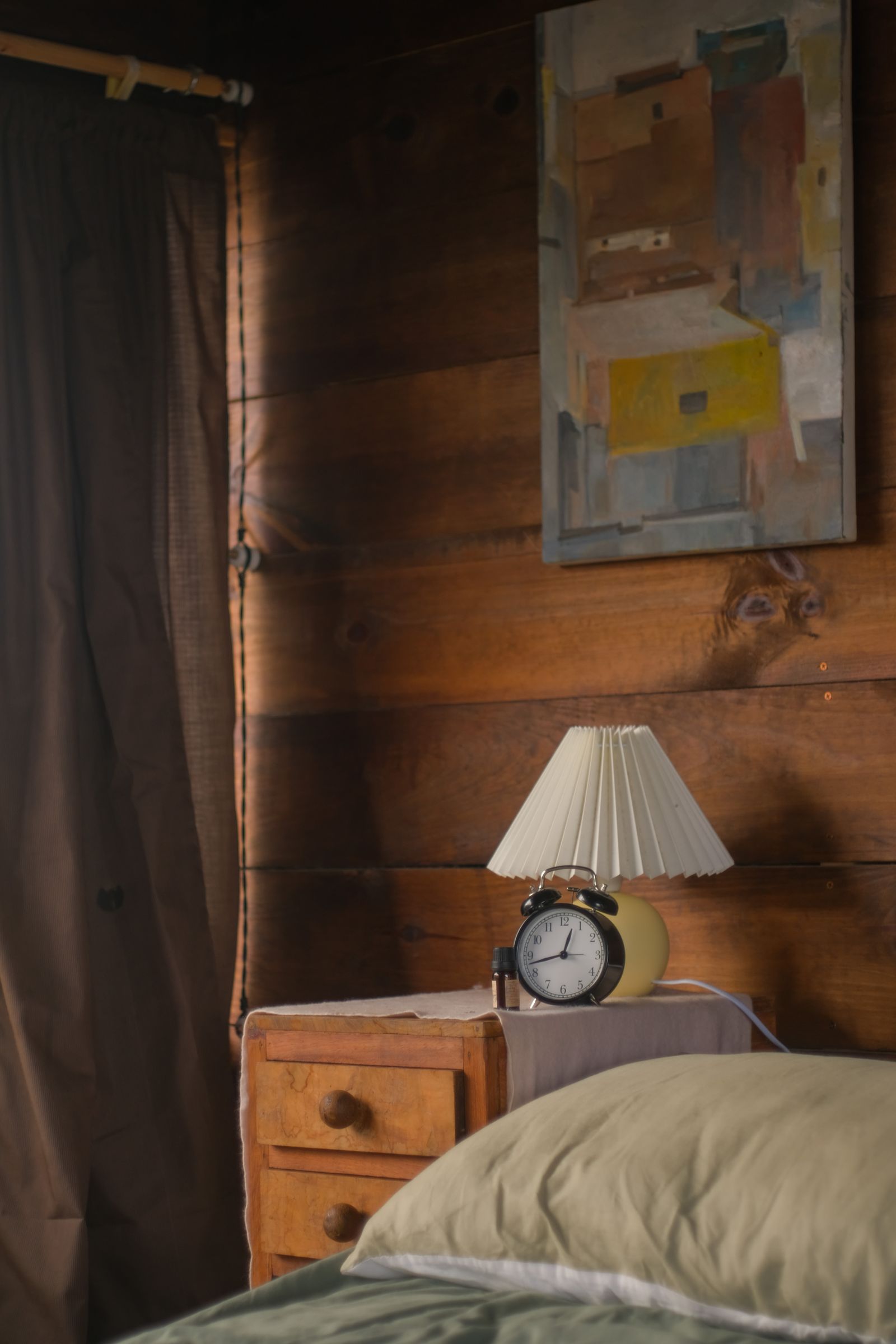
The useful question is not why you woke. It is what you do in the next twenty minutes.
The house is quiet and you are not. Three in the morning, or four, and the mind has already started the list: the appointment, the bill, the name you could not find at dinner. The National Institute on Aging says older adults still need about seven to nine hours. The night just gets more broken. Waking is common. It is not, by itself, a failure.
What to do while you are up
If you are awake and angry at the ceiling, get up. Keep the light low. Sit in a chair until you are sleepy, then go back. The bed is for sleep, not for a staring contest. A bright phone makes the window longer. So does a second cup of anything with caffeine after midafternoon, and so does a drink you took to get drowsy. Alcohol can put you down and then wake you later. It is a poor sleeping medicine.
- Keep the same bedtime and the same hour of getting up, including Sunday.
- Get ordinary daylight in the morning. A walk outside does more than a lamp at midnight.
- If a nap is going to happen, take it early. A late nap spends the night in advance.
- Leave the clock face turned away if watching it makes you count the hours.
Tell someone if the night has a pattern
Loud snoring, gasping, or legs that jump are not a character flaw. They are a reason to tell your own clinician. So is a sleeping pill that came from a neighbor, a leftover bottle, or a commercial. Do not start one because a newsletter, including this one, described a bad night.
The practice is small. Same hour. Dim light if you are up. No new pill from the bathroom drawer. If the broken nights last and the days feel unsafe — drowsy at the wheel, unsteady on the stairs — that is the appointment, not another gadget.
Sources to read yourself
- National Institute on Aging, A Good Night’s Sleep
- Centers for Disease Control and Prevention, About Sleep
A note from the desk
This is general reading, not a diagnosis and not a plan written for you. Before you change how you move, eat, or what you keep in the cabinet, ask your own clinician. Do not stop a prescribed medicine because of something you read.