Ask which kind you are getting. External beam and a source placed inside the body are not the same errand.
On film, from the National Cancer Institute. Prostate radiation, silent footage (silent). No narration. A person on a treatment table and the machine, from the Institute’s public footage. It shows the room. It does not choose your treatment.
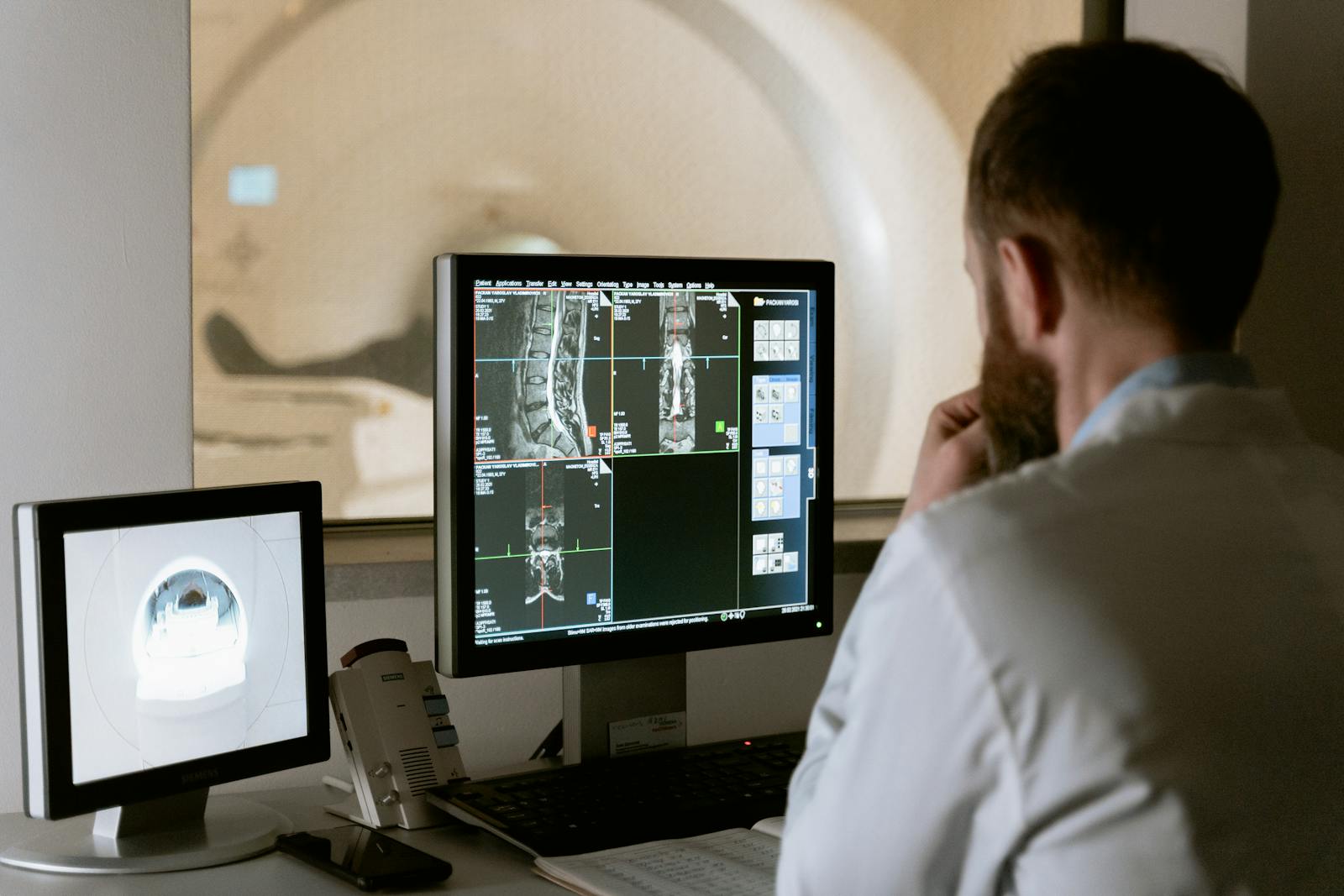
The National Cancer Institute describes radiation therapy as high doses of radiation used to kill cancer cells or slow their growth by damaging DNA. At low doses, radiation is how a dentist looks at a tooth. Treatment is not that. The dose is higher, it is aimed, and it is repeated on a schedule. The film on this page is silent footage from the Institute: a person on a treatment table, and the machine. It has no narration. It is here so the room is less of a surprise, not so you can learn your own plan from a camera.
Two different errands
External beam radiation comes from a machine outside the body. You lie still. The visit is often shorter than the drive. You go home the same day, over days or weeks. For that common kind, you do not carry radiation home in your body. Internal radiation, sometimes called brachytherapy, places a source in or near the tumor. Some of those treatments do come with rules about distance from other people for a while. Ask which kind you are getting before you promise a grandchild they can sit in your lap that night. The American Cancer Society puts “Will I be radioactive?” on the question list for a reason.
What they are trying to do
The Institute says radiation can be used to try to cure a cancer, to keep it from coming back, to slow it, or to ease a symptom such as pain or bleeding. Those are different goals. Ask which one is yours. Ask whether chemotherapy or another treatment will happen in the same weeks. Ask how many sessions, how long each one is, and whether you need a ride because of fatigue, not because you will be asleep.
Skin, fatigue, and the organs next door
The beam passes through skin. Skin in the field can become dry, pink, or sore. Ask what soap and what cream your team allows. Do not arrive with a jar from the pharmacy because a neighbor liked it. Some creams interfere with the mark or the dose. Fatigue is common and can build across the weeks, then linger after the last visit. The organs near the target can be irritated: the bladder, the bowel, the throat, the breast, depending on where the beam is aimed. Ask what is expected in your neighborhood of the body, and which of those changes means a call rather than a note for the next visit.
Marks on the skin are there so the team can aim the same way each day. Do not scrub them off. If a mark fades, tell them. Do not redraw it yourself.
The machine is not the decision
Seeing a table on film does not mean radiation is the right treatment for you. Some cancers are treated without it. Some are treated with it first. That sentence belongs to your radiation oncologist, after they have seen the scans.
Sources to read yourself
- National Cancer Institute, Radiation therapy to treat cancer
- American Cancer Society, Questions to ask about radiation
A note from the desk
This is general reading, not a diagnosis and not a plan written for you. Before you change how you move, eat, or what you keep in the cabinet, ask your own clinician. Do not stop a prescribed medicine because of something you read.