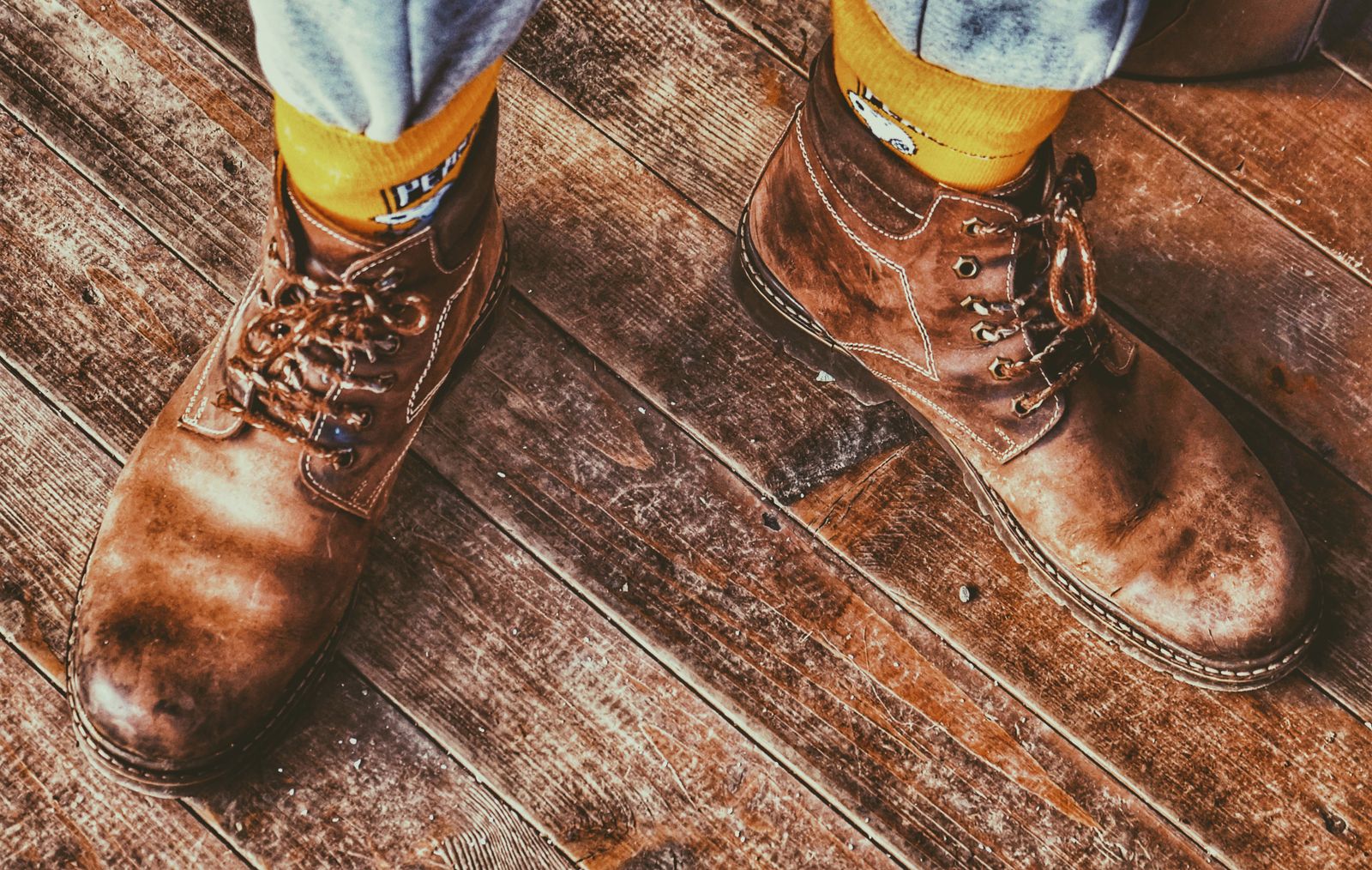
Socks on a wood floor are not a shoe.
The walk that keeps the keys assumes your feet are in something that grips. A lot of falls at home are not mysterious. They are a smooth sole, a heel worn down on one side, or socks on a wood floor between the bed and the bathroom. The Centers for Disease Control and Prevention treats the shoe as part of fall prevention. A logo on the sock is not the part that matters.
Turn the shoe over
- If the sole is smooth as a spoon, the shoe is finished for walking.
- If the heel is ground down on the outside or the inside, it is tipping you.
- If the foot slides forward or the heel slips off, it is not tied, not strapped, or not your size.
- Afternoon swelling is real. A shoe that fits at 8 a.m. and bites at 4 p.m. is the wrong shoe for the errand.
You do not have to buy the boot in an advertisement. A pair you already own, with a sole that still catches and a lace or a strap that holds, is enough for the walk around the block. Save the slippers for the chair. The trip from the bed to the kitchen is a walk, and it deserves the same shoe.
If someone has already chosen for you
A clinician or a physical therapist who has named a shoe, a brace, or a rule about bare feet is looking at your balance, not at a catalog. Wear what they said. This page does not outrank them, and it does not ask you to get on the floor to test anything.
Sources to read yourself
A note from the desk
This is general reading, not a diagnosis and not a plan written for you. Before you change how you move, eat, or what you keep in the cabinet, ask your own clinician. Do not stop a prescribed medicine because of something you read.